Weekly presentation : Jie Xu
Abstract:
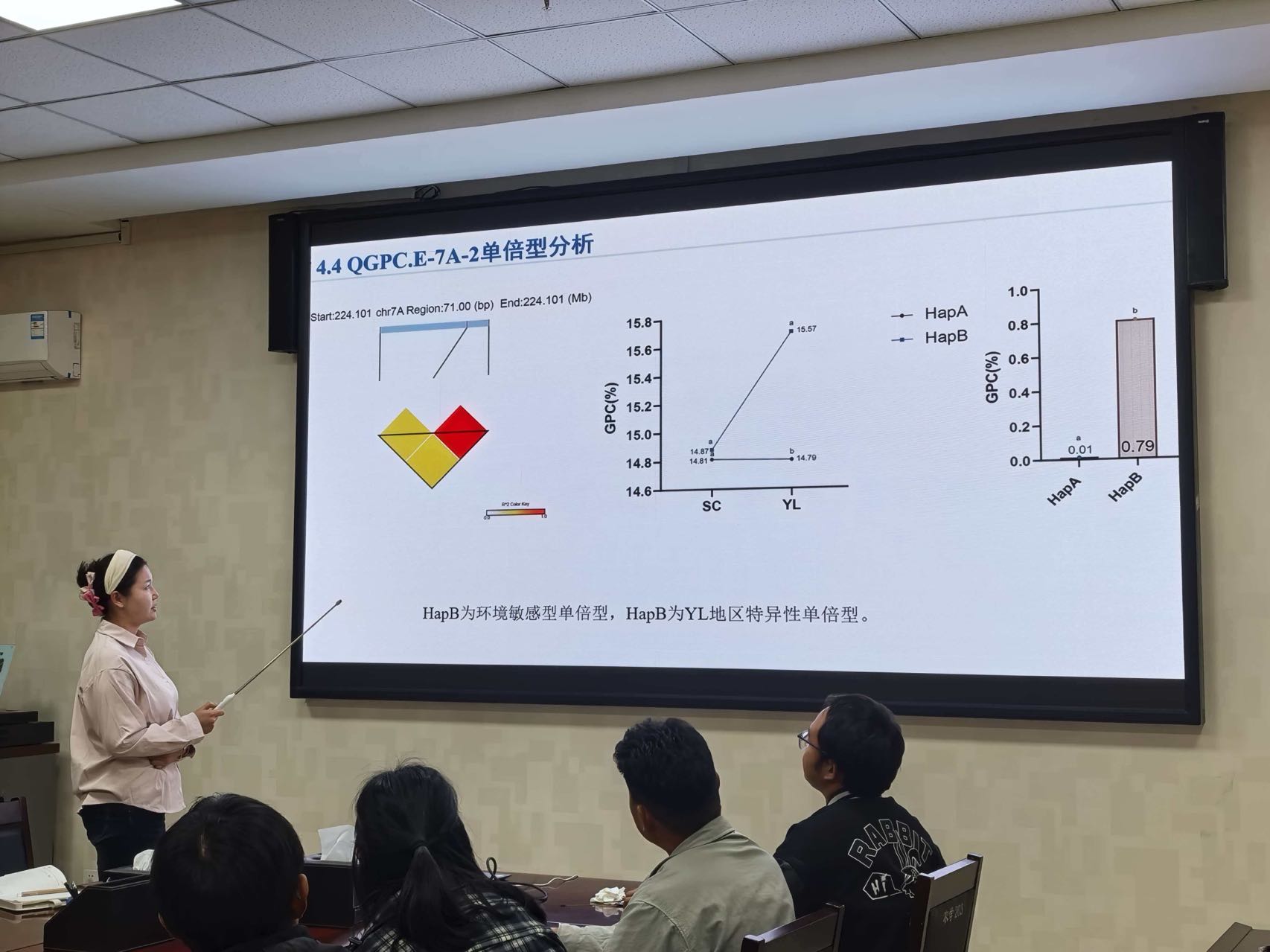
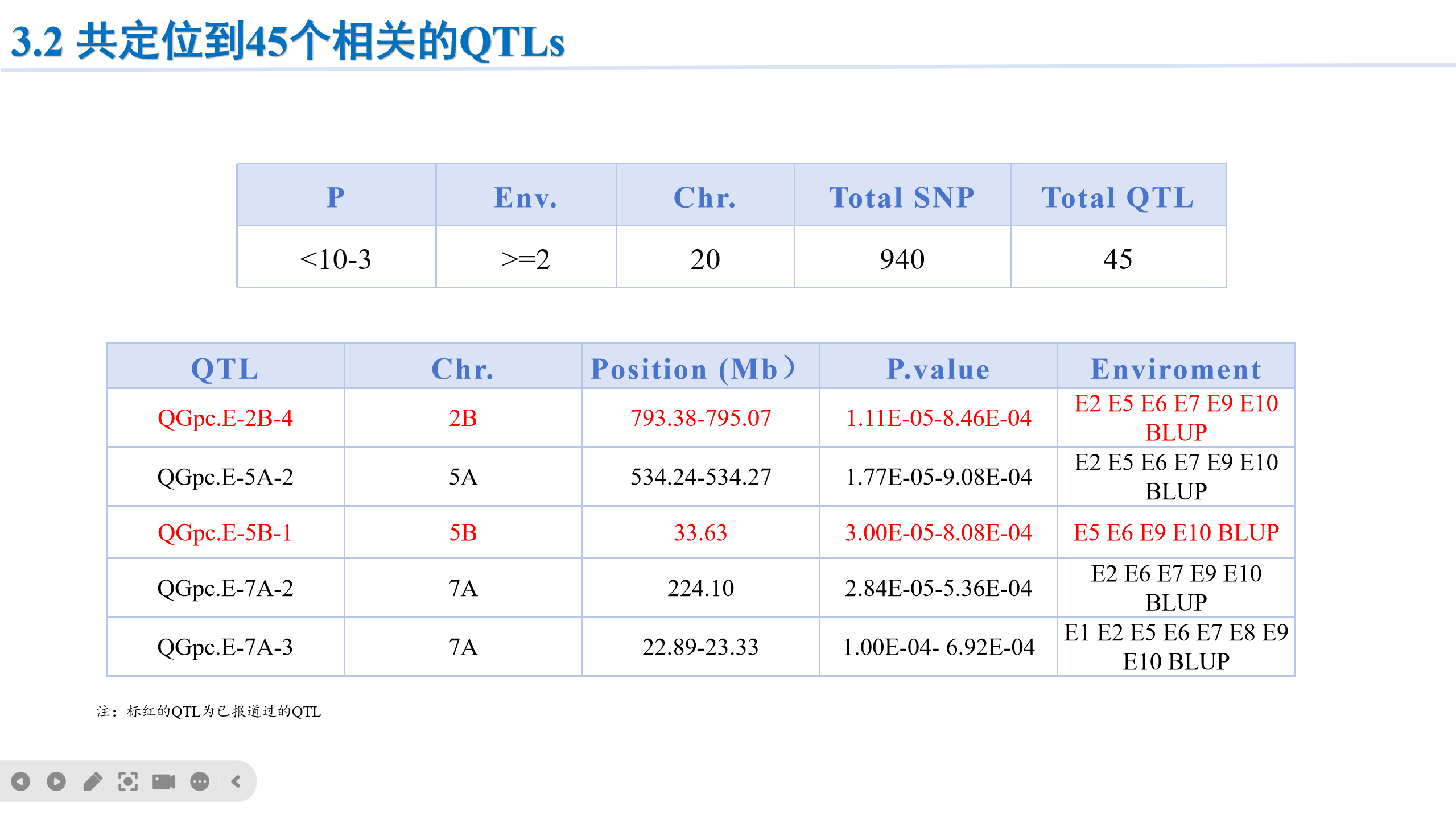
In this study, a natural population of 406 wheat accessions was planted in Yangling, Shaanxi and Sichuan from 2019 to 2022, and grain protein content (GPC) was measured using near-infrared spectroscopy to identify environment-responsive genetic loci through genome-wide association study (GWAS). Phenotypic analysis revealed that GPC followed a normal distribution, characteristic of typical quantitative traits. GPC was relatively stable across years in Yangling but exhibited greater fluctuation in Sichuan. Variance component analysis showed that genotype contributed 35.1%, environment 27.1%, and residual (including G×E) 37.8% of total variation, with a broad-sense heritability of 84.5%. The significant G×E effect provided a statistical basis for GEI-based association analysis. Using the CMLM model, six stable QTLs associated with GEI were identified on chromosomes 2B, 5A, 5B, and 7A, among which QGpc.E-2B-4 and QGpc.E-7A-3 were detected across six and eight environments plus BLUP, respectively. Haplotype analysis revealed that each QTL harbored both environment-sensitive and region-specific haplotypes; for instance, HapB was identified as an environment-sensitive haplotype with specificity to the Yangling region. Breeding selection analysis indicated no significant selection bias for any of the six QTLs, suggesting that these loci have not yet been systematically utilized in breeding programs. These findings provide theoretical basis and candidate markers for marker-assisted selection toward high yield and quality in wheat.